


You skim the surface, brush the walls, and vacuum the floor, yet another cleanup interrupts your weekend.
A Corded Robotic Pool Cleaner can take over repetitive cleaning tasks when its capabilities match your pool.
These five signs help you recognize where that support could make the biggest difference.
Five Signs Your Cleaning Routine Needs More Support
1. Manual Vacuuming Keeps Taking Over Your Free Time
You planned to enjoy the pool, but first you need the pole, vacuum head, and hose. Then you spend the session guiding the equipment across the floor.
That repeated hands-on work is a strong reason to consider robotic cleaning. A suitable robot moves through its cleaning cycle without requiring you to push a vacuum head continuously.
Its practical benefit is time you can stop spending on repeated floor passes. You still prepare the equipment, retrieve it correctly, and clean its filter.
Try this check: Record the minutes you actively spend vacuuming during several ordinary cleaning sessions. Separate those minutes from water testing and other tasks the robot will not replace.
This gives you a realistic picture of the work available to automate. It also prevents a promise of faster cleaning from becoming an unsupported expectation.
2. The Surface Looks Clear, but Leaves and Grit Remain Below
A quick pass with the net can make the surface look better. It does not remove debris that has already settled on the pool floor.
If you regularly notice submerged leaves, insects, or gritty patches, surface skimming is only addressing part of the problem.
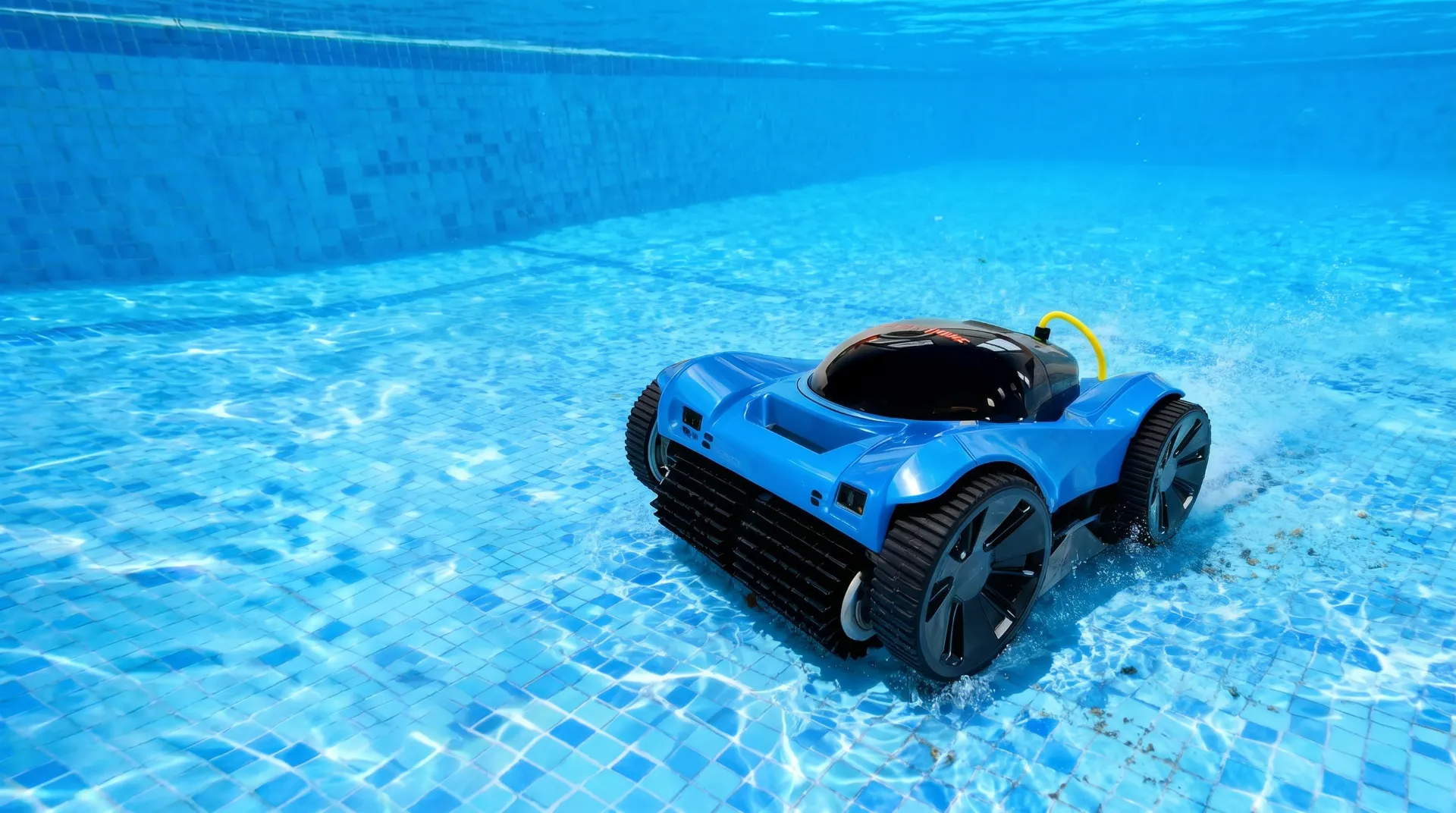
A robot with suitable intake and filtration can collect settled debris during its cleaning cycle. The onboard filter retains captured material until you empty it.
Match the intake opening to the debris you usually collect.
Check whether the supplied filter captures your recurring fine dirt.
Choose an accessible filter basket that you can rinse easily.
Frequent leaf fall may require emptying the basket before another cycle. Newly arriving debris can also appear after cleaning, so judge results against the conditions that day.
The goal is a manageable collection routine, rather than expecting one session to prevent tomorrow's leaves.
3. Brushing the Walls and Waterline Has Become a Separate Chore
A cleaner-looking floor does not solve every surface-cleaning task. You may still find yourself reaching for a brush along the walls or waterline.
A model specifically rated for wall climbing and waterline scrubbing can help with this repeated work. Its brushes make contact with supported surfaces as the drive system moves it.
Before choosing, distinguish the surface problem: Loose dirt and routine buildup differ from mineral scale, permanent discoloration, or damaged finishes.
A robotic brush is not a guaranteed treatment for every visible mark. Ask which surfaces the proposed model supports and what its waterline program actually cleans.
You may still need targeted manual brushing in unsupported areas. A useful upgrade reduces recurring brushwork while leaving clear expectations about the work that remains.
4. Your Cleaning Effort Is High, but the Results Are Patchy
One area looks good while another still holds scattered dirt. You repeat the same passes because it is difficult to judge coverage from the poolside.
A robot with appropriate navigation can organize movement across the areas it is designed to clean. That can reduce the need to direct each pass yourself.
However, programmed movement does not guarantee access to every feature. Benches, tight corners, steps, and shallow platforms deserve individual checks.
Use a simple pool sketch when discussing coverage. Mark the areas you currently revisit and ask for evidence of comparable layouts being cleaned.
The benefit you want is fewer missed areas requiring repeated attention. Confirm it through observed results rather than assuming an intelligent-navigation label establishes complete coverage.
5. You Keep Postponing Routine Cleaning Until It Becomes a Bigger Job
Sometimes the problem is the effort needed to begin. A busy schedule turns a planned cleanup into something you repeatedly move to tomorrow.
A straightforward robotic routine can make regular surface cleaning easier to start. Selected models also provide timers or scheduling features that help organize cleaning sessions.
With a corded setup, the supplied power unit feeds the robot through its floating cable. Available power supports the programmed cleaning session, subject to the model's operating instructions.
Look for controls that fit the way you actually use the pool. A clear start process and accessible filter can be more useful than unnecessary menus.
Scheduling still requires sensible preparation and equipment care. Confirm whether the model may remain submerged between sessions and how the manufacturer expects it to be stored.
What the Robot Actually Does for Your Pool
The visible benefit comes from several functions working together. A corded robotic cleaner typically has its own drive system, pump, brushes, and debris filter.
Function | How it helps with the cleaning task |
|---|---|
Driven movement | Moves the cleaner across supported pool surfaces |
Brush contact | Loosens dirt through mechanical scrubbing |
Pump and intake | Draws water and suitable debris into the cleaner |
Internal filtration | Holds captured material for removal after cleaning |
Programmed controls | Organizes the selected cleaning cycle |
These functions allow surface cleaning without connecting the robot's intake to the pool's suction plumbing. Collected material stays in the robot's filter rather than being routed through that intake into the main filter.
Your pool's circulation and filtration system still has its own job. A robot supplements surface maintenance rather than establishing the pool's required pump schedule.
Supported coverage also depends on the chosen model. Floor cleaning, wall climbing, waterline work, and floating-surface collection are separate capabilities to confirm.
Match Your Biggest Frustration to the Right Feature
Start with the task you most want to hand over. Then check the feature that directly addresses it.
Recurring frustration | Feature to verify | Evidence worth requesting |
|---|---|---|
Long floor-vacuuming sessions | Rated pool size and floor coverage | A suitable cycle for comparable dimensions |
Leaves collecting underwater | Intake and debris-storage capacity | Pickup of representative leaves |
Persistent fine grit | Appropriate filter media | Supplied filter specification and sample collection |
Repeated wall brushing | Supported wall and waterline programs | Demonstration on a comparable pool finish |
Missed sections | Navigation and geometry compatibility | Coverage around similar slopes or obstacles |
Difficulty maintaining a routine | Suitable controls or scheduling | Operating instructions for the intended routine |
Convenient filter access matters across these situations. If rinsing the filter is awkward, part of the intended convenience disappears.
Also check cable reach from an approved power-supply position. The robot must reach the required areas without an unsuitable electrical arrangement.
Tip: Ask the seller to explain how the exact model handles your three most repetitive cleaning tasks.
Avoid choosing on suction figures or app features alone. The important result is less unfinished cleaning in your particular pool.
Build a Routine That Gives You Time Back
A workable routine should be easy to repeat from preparation through storage. Follow the supplied manual for the exact operating sequence.
Prepare the pool: Remove unsuitable large objects and check conditions against the robot's stated operating limits.
Arrange the power supply: Use the specified unit, electrical protection, placement, and cable setup required by the manufacturer.
Select the task: Choose the cleaning mode that covers the surfaces needing attention.
Let the cycle work: Keep swimmers out during operation and follow the manufacturer's instructions about monitoring.
Finish the cleanup: Isolate power as instructed, retrieve using approved lifting points, and rinse the filter.
Store for next time: Follow the care instructions for the robot, brushes, and cable.
Do not lift the robot by its electrical cable. Compare the required lifting effort and storage route before purchase, especially if handling is a concern.
Check the filter after sessions with substantial debris. An obstructed filter can reduce cleaning performance and make another cycle less useful.
The robot's working time is not the same as your hands-on time. You gain convenience when preparation and aftercare replace a longer stretch of manual vacuuming and brushing.
Keep Water Care Alongside Surface Cleaning
A visibly dirty floor is a cleaning problem that a suitable robot may help address. Cloudy water or recurring growth can involve additional maintenance issues.
Mechanical pickup does not replace water testing or maintaining the required sanitizer and pH. Your circulation equipment and main filter also require their normal care.
Note: A pool that looks cleaner is not automatically ready for swimming; continue the required water checks.
If the same cloudy appearance persists, investigate water balance, filtration, and other causes. Repeating a robotic cycle is not a complete diagnosis.
Likewise, keep manual tools available for areas outside the model's stated coverage. Professional inspection or targeted treatment may be appropriate for persistent staining or equipment problems.
This division of work keeps the benefit practical. The robot handles suitable repetitive surface tasks while you retain control of the wider maintenance routine.
Know Whether the Upgrade Is Helping
Judge the result across several representative sessions rather than one unusually clean day. Record the conditions so that changing leaf fall does not distort the comparison.
Useful observations include the following practical measures:
Track your active vacuuming and brushing time before and after use.
Note which floor and wall areas still need manual attention.
Record how often the robot's filter needs emptying.
Check whether preparation and retrieval fit your physical handling needs.
Observe whether you complete planned cleanings more consistently.
These records show whether the machine is addressing your actual pain points. They also provide useful detail if you need help adjusting the program or checking compatibility.
No fixed savings percentage is needed to identify a worthwhile change. Less repeated vacuuming, fewer missed sections, and a routine you maintain are meaningful improvements.
Conclusion
Repeated vacuuming, settled debris, difficult brushwork, patchy results, and postponed cleaning are useful signs that your routine needs support.
A suitable corded robot can take over recurring surface work while you manage water care and equipment upkeep.
Share your main cleaning frustrations with Addotron Robotics and confirm the coverage, filtration, and handling features you need.
FAQ
Q: When should I consider a Corded Robotic Pool Cleaner?
A: Consider a Corded Robotic Pool Cleaner when recurring vacuuming, debris pickup, or supported brushwork is consuming too much attention. Match the model to your pool's surfaces and debris. The strongest reason is a specific cleaning task it can reliably take over.
Q: Can a Corded Robotic Pool Cleaner clean walls and waterlines?
A: A Corded Robotic Pool Cleaner can clean those areas when the model explicitly supports them. Verify wall climbing, waterline programs, and pool-finish compatibility before purchase. Floor-cleaning capability alone does not establish wall coverage.
Q: Does a Corded Robotic Pool Cleaner replace water testing?
A: A Corded Robotic Pool Cleaner supports mechanical cleaning rather than replacing water testing. Continue monitoring sanitizer and pH and maintaining the main filtration system. Cleaner-looking surfaces alone do not establish safe swimming conditions.
Q: Will robotic pool cleaning remove every kind of stain?
A: Robotic pool cleaning can help with suitable dirt and routine surface buildup. Mineral scale, permanent discoloration, and damaged finishes may need different treatment. Confirm the surface problem before expecting a brush to remove it.
Q: How should I measure robotic pool cleaner time savings?
A: Measure robotic pool cleaner savings by comparing your active cleaning time across representative sessions. Include preparation, retrieval, filter rinsing, and remaining manual work. Avoid treating the robot's full cycle duration as time you must spend working.